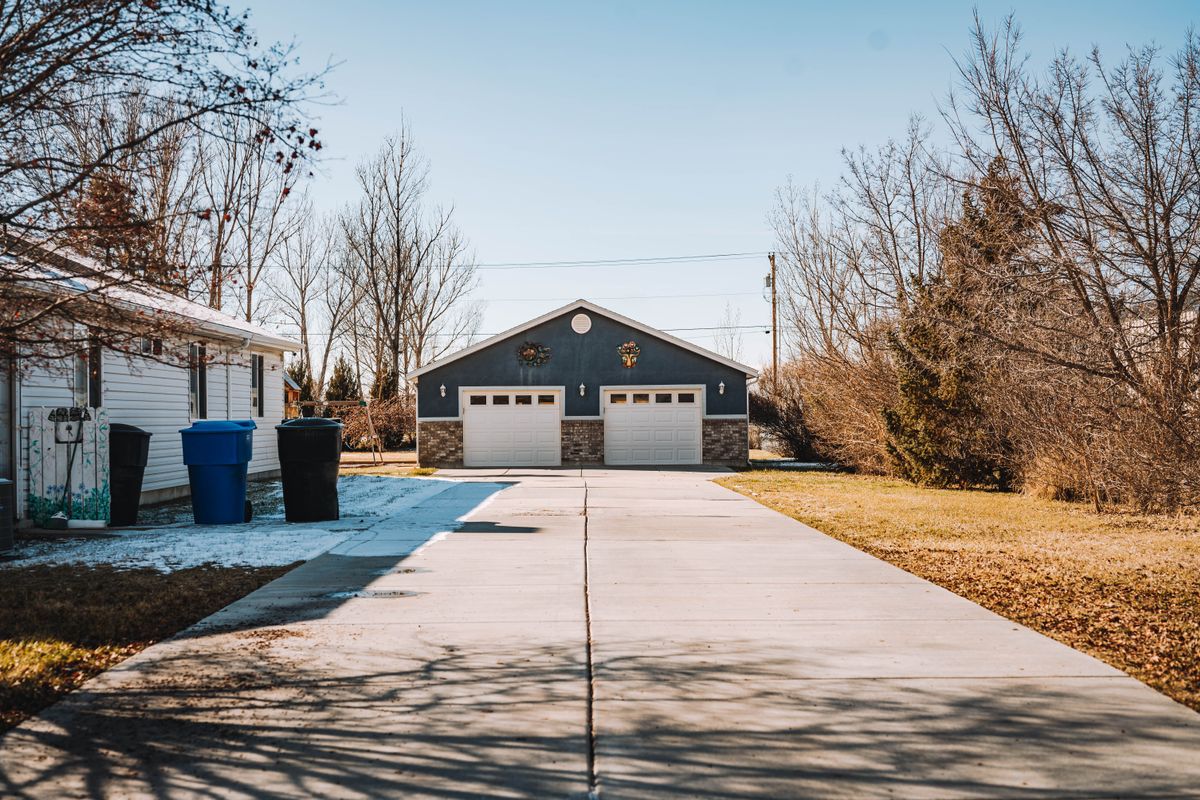
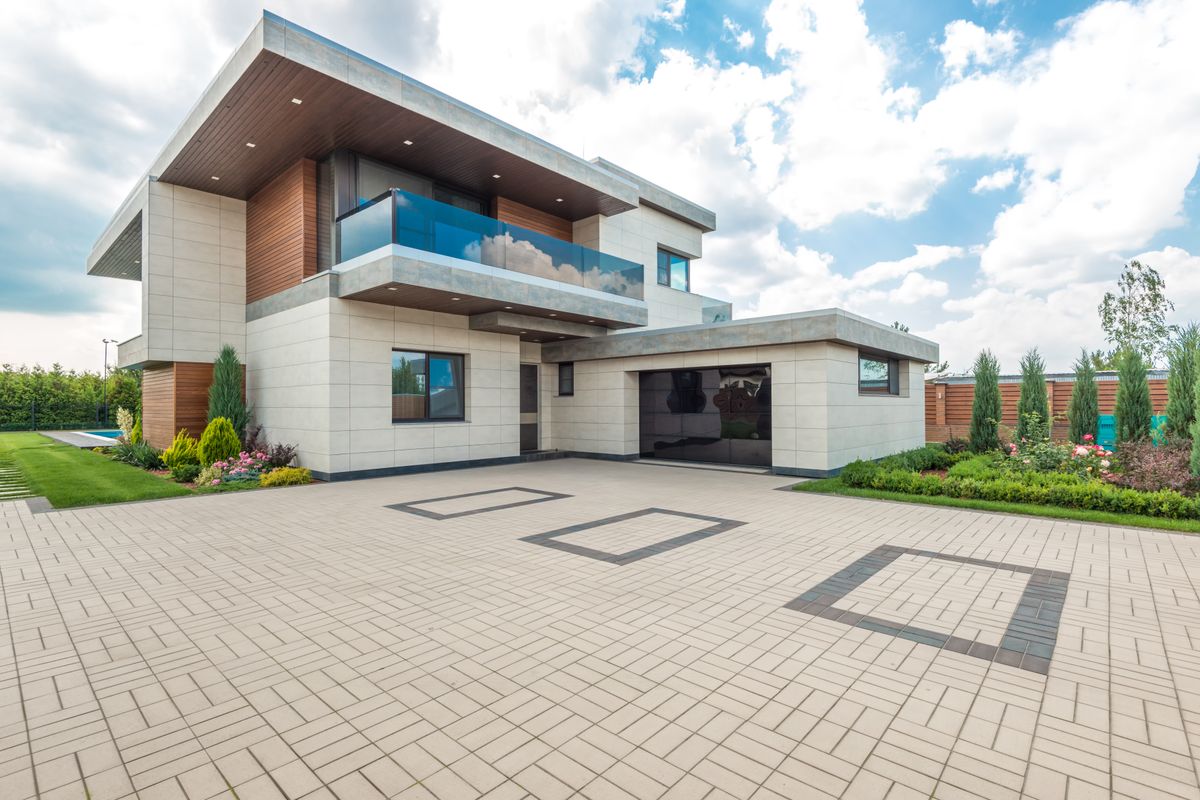
The short version for Bradenton: a driveway here fails in one of two ways, and which one you have depends on where in the city the slab sits. In the older blocks between the Manatee River and 14th Street West - the Village of the Arts streets, the 1920s bungalows off Manatee Avenue, the grids around Old Main Street - the concrete is genuinely old, and the culprit is river fog plus oak canopy that keeps the surface damp until the sun is high, feeding a green organic film and setting oak tannin into a pour that has already weathered six or seven decades. Out toward Palma Sola, Bayshore Gardens and the island bridges, the slab is newer but the load is different: salt air off Anna Maria Island and the fine beach sand that rides home on tires. And in both halves of town the sprinklers are running Manatee County reclaimed water, whose iron is what draws the orange arcs and speckles a surface cleaner alone will not move. A Bradenton driveway comes back bright because the marks were treated first and the pressure was chosen second - not the other way around.
Why a Bradenton driveway is really two different jobs
The city has a clear seam in it. Downtown and the blocks around it - the streets off Manatee Avenue, the tight grids between the Riverwalk and 14th Street West, and the small painted cottages that make up the Village of the Arts - were laid out long before anyone was building wide concrete aprons, and much of the flatwork there is original or a mid-century replacement over the same base. It is a softer, older surface by now, and it is the one most likely to sit under a mature live oak at the same time. That is the hard combination: a delicate slab and the heaviest organic staining in the city, both in the same square of concrete.
Drive west from downtown, though, and the arithmetic changes. Palma Sola, the streets off Cortez Road, Bayshore Gardens and the blocks that climb toward the island bridges have far more slabs poured in the last thirty years, in wider lots, often with paver aprons and pool decks attached. The concrete there is sounder and the shade is thinner, but the slab sits closer to open water, so it collects a fine saline film and the pale quartz sand that blows and washes in off the beaches. Different surface, different grime, different method. A company that quotes every Bradenton driveway off one countywide rule is guessing, and the giveaway is a slab that comes back either damaged or still blotchy.
The reclaimed water on the sprinkler heads, and the orange it leaves
The single most common mark on a Bradenton driveway is rust, and it almost never came off a car. Much of this city irrigates on Manatee County reclaimed water, and reclaimed water carries iron and dissolved minerals that potable water does not. Every time a head throws across the slab, or a mister overshoots a bed, it lays down a thin film of that water. In the dry stretch of the year it builds up and oxidizes into the orange arcs, speckle bands and rusty shadows that curve along the concrete in exactly the pattern of the spray. It is a mineral stain, not organic growth, so the cleaning solution that kills algae does nothing to it - and more pressure makes it worse, because a heavier blast roughens the slab around the mark and leaves a pale halo that shows more than the rust did.
The fix is chemistry plus honesty. The rust arcs get their own product - an iron remover worked into the affected patch and rinsed clear - and we tell you the part that actually decides whether the mark stays gone: if a head is aimed across the driveway, the arcs will return no matter how clean the slab is when we leave. Moving that head a few degrees, or swapping to a drip line in the bed, is the difference between a driveway that stays bright and one that rusts back over within a season or two. On a newer build with aggressive sod irrigation and heads spraying across the apron, that adjustment is usually the whole job.
Old in-town concrete is the surface that needs the gentlest hand
Some of the most characterful driveways in Bradenton are also the easiest to ruin with a careless wand, and the older blocks are full of them. Between Manatee Avenue and the river, and in the Village of the Arts where the cottages run to narrow gravel and concrete strips, you find exposed-aggregate pours, soft trowel-finished aprons and shell-mixed concrete from an earlier era of local building. Decades of Gulf sun and salt air have left that surface slightly chalky and open, with the aggregate pebbles proud of the paste around them. Too much pressure erodes that paste, opens up the finish and leaves lighter pits that stay visible for years, and it does the same to the shallow expansion joints and the fine crazing that every old slab in this climate carries.
So the older half of town gets a low-pressure treatment with real dwell time: the chemistry lifts the growth and the staining off the surface, and the wand mostly rinses. Where a slab has settled or cracked - and around mature oaks, root heave makes that ordinary - we clean it without pretending the wash will level it. If concrete under the oak canopy has stained dark over many seasons, killing the growth and rinsing will lift much of the color, but the ghost of the deepest staining can take a second pass to fade, and we say that before the work starts rather than after.
River fog, canopy shade, and the part of the drive that greens first
Bradenton's riverfront sits in a band of morning damp that the rest of the city does not get. The Manatee River keeps the air heavy until mid-morning, and the oaks and banyans that canopy the older streets hold that moisture against the ground long after the open lots have dried. The result is predictable: the north-facing strip along the house, the run of slab under the tree line, and the apron that tucks beside the garage are damp for more of the day than the open middle of the drive, and those are exactly the sections that grow the green film first. It is the same moisture that mildews a shaded wall, only now it is underfoot.
That matters because of how the growth behaves. Algae and mildew on concrete work down into the pores rather than sitting on top, so a fast pass over the shade can make it look clean on the day and green again by the following weekend, because the top layer was disturbed while the growth underneath was never killed. The treatment that holds is one that dwells long enough to kill it at the root and then rinses everything clear. Working the sunlit apron and skipping the shade because the shade does not look as bad is how a driveway ends up needing attention twice as often as it should.
The island side of town is a salt-and-sand problem
West of the bridges the driveway carries a completely different load. On the streets that feed Anna Maria Island, Holmes Beach and Bradenton Beach, and on the mainland blocks around Palma Sola Bay and Perico, the fine pale sand off the Gulf beaches migrates by wind and by tire onto drives, walks and garage aprons. Ground against the surface by foot and vehicle traffic, it acts as a slow abrasive that dulls the finish, and where a drive is pavered or stamped it settles deep into the gaps, keeping the base wet underneath. Sitting on top of that sand is the salt film off the water, which in the dry season can cure into a crust rather than staying soft, and the same breeze oxidizes metal edging and stains the slab a dull grey.
This is a rinse-out job as much as a wash: the sand has to be carried clear of the joints and off the slab rather than pushed around, and the salt has to be lifted with chemistry rather than wet down. It is also the part of the city where the pressure rule flips - pavers and shell-stone aprons by the water are exactly the surfaces where a straight-down stream excavates the joint sand, drops the units and opens the seams to weeds and ants. Where a paver drive has already lost its joints, the honest answer is a re-sand and a sealer, which is a separate service from a clean.
What a wide-pass clean alone will not fix
By far the most common reason a driveway looks disappointing after a cheap wash is that the stains were never treated. A surface cleaner run straight across a slab brightens the clean areas and leaves every mark exactly where it was, and the contrast is what you notice - a bright drive with four dark ghosts on it reads worse than a uniformly dull one. The marks that need handling before the cleaner ever runs are the reclaimed-water rust arcs, the oil shadow from a car that sat or leaked, battery acid and paint drips, and the brown tannin that oak leaves and acorns leave under the tree line.
There is also a category of mark that is not a stain at all, and it is worth being straight about it. Concrete that has pitted or spalled from years of sun and salt will not be made smooth by cleaning - it will only be made lighter, which can make the texture read more clearly. A painted drive that is peeling cannot be cleaned back to a finish; pressure just completes the removal, leaving blotchy patches, and that is a recoating decision rather than a cleaning failure. A sealer flaking off is the same conversation, and where a slab has settled into a low spot that holds water, a wash will brighten it and the puddle will return with the next storm. What a proper clean does honestly deliver is the living growth removed, the rust and oil and tannin lifted where they have not worked too deep, and a slab that dries one even shade - which on sound concrete is the cheapest curb appeal there is.
How a Bradenton driveway is actually cleaned
The order of the visit is the whole difference, so it is worth saying what it looks like. We start by walking the slab with you to identify which marks are actually on it and what the surface is made of, because that decides the chemistry and the pressure setting. Then the dry debris goes first - oak leaves, acorns, sand, catkins - with a blower and a stiff broom, so nothing is ground into the surface once it is wet. The landscaping, the beds, and the paint at the base of the wall are pre-wet so nothing they touch can burn. Only then do the marks get treated by hand, one product per stain family, with a dwell time long enough for the chemistry to do the work. The surface cleaner follows in slow, overlapping passes, and the edges, the apron and the tight strip along the garage and the wall get finished with a wand at a setting the surface can take - never a zero-degree tip, which is how concrete gets etched, striped and hollowed out.
The last pass is the detail that separates a professional job from a rental machine: the expansion joints, the curb line where the drive meets the street, the sidewalk panel across the apron, and the garage threshold where oil always collects. Those are the parts your eye lands on when you pull up, and they are the parts a single wide sweep misses. We finish with a full rinse that carries everything off the slab rather than leaving the loosened film to dry back on, and we protect the storm drain or spread the runoff where the property's drainage calls for it.
How often a Bradenton drive wants it, and how to get a straight number
A Bradenton driveway follows the damp and the canopy rather than any calendar, because nothing here freezes hard enough to reset the growth. A wide-open slab on a newer west-side lot, with the sprinkler heads aimed away from the concrete, can genuinely hold up for a year and still look cared for at the curb. An older in-town drive under oaks, or an apron in the salt-and-sand belt near the bridges, will want a visit sooner, because that is how quickly the film and the mineral marks return on those streets. The two natural windows are after the spring pollen has finished falling, when the drive is finally clear of the worst oak debris, and again in the fall, once the storm season stops adding to the load and before the holidays bring the houseguests. If a listing or a photo shoot is on the calendar, the sand and the joints matter more than the middle of the slab.
Price is not a guess at square footage. We want a walk of the slab, or a couple of daylight photos, so we can see which mark is actually winning on your street and how much of the drive never sees sun. The details that firm up the number are what the drive is made of, whether pavers or a paver apron are in the mix, how much canopy hangs over it, and whether oil, rust or paint are part of the problem, because each of those changes the products we bring and the time they need. The quote is flat and given upfront, and it is agreed before anything begins. See what else we do around Bradenton, read our guide to lifting oil and rust off a Suncoast driveway, or send us a photo and we will tell you what your slab actually needs.